
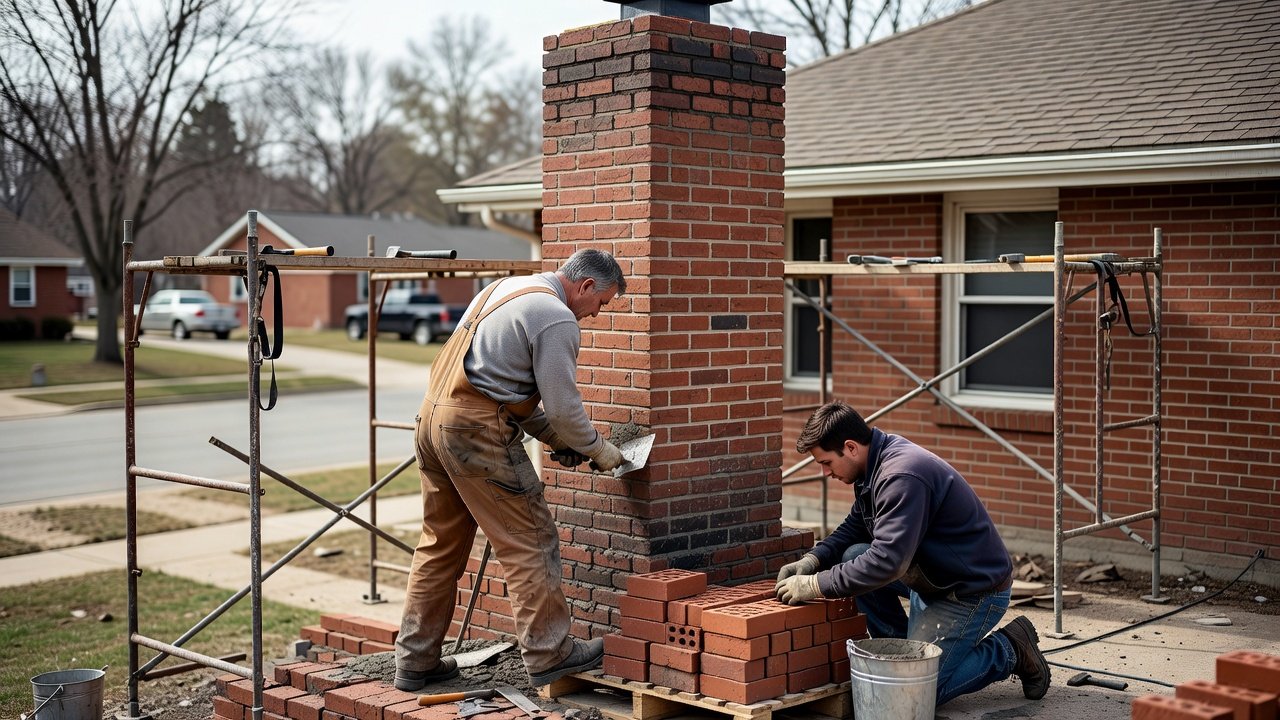
Essential Chimney Rebuilding Service: 2026 Guide for Jersey City, NJ Residents
Most homeowners assume a crumbling chimney is just cosmetic a few missing bricks, some weathered mortar, nothing urgent. That assumption has cost people far more than they expected, and in a few cases, it has cost them their homes. A chimney that looks rough on the outside is often structurally compromised on the inside, and the gap between “it still works” and “it’s dangerous” can close fast, especially through a Jersey City winter.
Last February, a homeowner in the Journal Square neighborhood called us after a contractor doing exterior work on the house flagged the chimney stack as a liability. She had been using the fireplace all season without issue no smoke smell, no visible fire, no alarm going off. What our certified sweep found was a badly deteriorated flue liner, spalled brick from freeze-thaw cycling, and mortar joints that crumbled to the touch. A chimney rebuilding service wasn’t optional at that point. It was overdue.
Why Jersey City Chimneys Take a Harder Hit Than Most
Chimneys here deal with conditions that accelerate structural wear: salt air from the Hudson waterfront, hard winters with repeated freeze-thaw cycles, and the simple reality that a lot of Jersey City housing stock dates to the early twentieth century. Brownstones in the Heights, row homes in Greenville, and older two-families in Bergen-Lafayette were built well but their chimneys weren’t designed to last 100 years without intervention. By the time a homeowner notices something wrong, the damage is usually more extensive than what’s visible from the yard.
According to the National Fire Protection Association, failure to clean and maintain chimneys is the leading contributing factor in home heating fires, accounting for 31 percent of such fires. Structural failures deteriorated crowns, collapsed flue tiles, failed mortar fall squarely into that maintenance category. NFPA 211 also classifies chimney inspections into three levels, and a Level 2 inspection is required after any event that could have damaged the chimney, including the kind of severe freeze-thaw stress we see here every winter.
Warning Signs You Need a Chimney Rebuilding Service Now
These are not hypothetical or abstract. These are things you can see, hear, or smell from inside or outside your home. We have organized them by urgency so you know what to do with each one.
Spalling or Falling Brick Pieces
If you are finding chunks of brick or fragments of mortar on your roof deck, in your gutters, or on the ground alongside the house, the chimney is actively shedding material. This is not cosmetic. Water has penetrated the masonry, frozen, expanded, and fractured the brick face from within. Call a pro now. We have seen this pattern accelerate quickly on older homes near the Paulus Hook waterfront where salt-laden moisture is a constant.
White Staining (Efflorescence) on the Exterior
That chalky white residue on the brick face is dissolved mineral salt being pushed outward by water moving through the masonry. The stain itself is harmless, but what it tells you is not water is actively traveling through your chimney structure. Left alone, it leads to spalling and eventually to mortar failure. Keep an eye on it short term, but schedule an inspection within 60 days.
Cracked or Missing Mortar Joints
Run your hand along the mortar lines between bricks on any section of chimney you can safely access. If the mortar crumbles, gaps are visible, or sections are missing entirely, the structural integrity of the entire stack is compromised. Mortar is the binding agent. Without it, you have a loose stack of bricks. Call a pro now.
A Damaged or Missing Chimney Crown
The chimney crown is the concrete or mortar cap that seals the top of the chimney stack around the flue. Cracks in the crown are the single most common entry point for water. From the ground, use binoculars if you can see visible cracks, chunks missing, or the crown looks uneven, water has been entering the system. Call a pro now. This is one of the most common deficiencies we find on inspections throughout the Westside neighborhood and older homes in Downtown Jersey City.
Rust Stains Around the Firebox or on the Damper
Rust inside the fireplace opening or on the damper plate is a direct indicator of water intrusion from above. The water has to travel through something to get there. That path is your flue, your liner, or both and wherever it is traveling, it is causing damage. Call a pro now.
Wallpaper or Paint Peeling Near the Chimney Wall
Interior moisture damage adjacent to a chimney chase is easy to misdiagnose as a plumbing issue or window leak. If the peeling or staining is specific to the wall that shares a surface with the chimney, the chimney is almost certainly the source. Schedule an inspection immediately.
A Strong Odor Even When the Fireplace Is Cold
Creosote smell in summer, or a persistent musty or smoky odor without a fire burning, often means water is activating creosote deposits inside a deteriorating flue. The CSIA notes that creosote at stage 3 buildup is highly flammable and can ignite at temperatures as low as 451°F. If the smell is strong and consistent, do not use the fireplace until a professional has evaluated the flue liner.
Visible Daylight Through the Flue (Seen from the Firebox)
Crouch down and look up through the damper opening with a flashlight. You should see the damper, the smoke chamber, and darkness above. If you can see jagged light through the flue tile — or if the liner tiles look cracked or collapsed — you have a serious structural failure. Call a pro now. Do not use this fireplace.
Choosing the Right Contractor — What to Ask and What to Avoid
A chimney rebuilding service is not a small job. Full or partial chimney rebuilds in the Jersey City area typically run between $1,500 and $6,000 depending on scope, with complete teardown-and-rebuild projects on taller stacks running higher. Any contractor quoting dramatically below that range without a clear explanation of what they are excluding deserves scrutiny.
Here is what we recommend asking any contractor before signing anything:
- Are you CSIA-certified? Can you show me your certification number?
- Do you carry liability insurance and workers’ compensation coverage in New Jersey?
- Will you provide a written scope of work with itemized materials and labor before any deposit?
- Do you pull permits when required by Jersey City or Hudson County codes?
- Can you provide references from rebuild projects in this area within the last 24 months?
Red flags worth taking seriously: a quote given without a physical inspection of the chimney, pressure to pay a large cash deposit upfront, no written contract, or a contractor who cannot explain what type of brick or mortar they plan to use. Chimney masonry requires specific mortar composition matched to the existing brick — using the wrong mix accelerates deterioration rather than stopping it. The U.S. Consumer Product Safety Commission estimates that carbon monoxide poisoning from heating equipment sends approximately 20,000 Americans to emergency rooms annually, and a botched rebuild can contribute to that risk just as much as a neglected one.
Our team is CSIA-certified, licensed to operate in New Jersey, and we document every rebuild with before-and-after photo records. We also pull necessary permits and work within local code requirements — which matters in Jersey City where older structures sometimes present code compliance questions that an inexperienced contractor will simply ignore.
What to Expect When You Call American Chimney Company
We start with a Level 2 inspection before recommending any rebuild work. That inspection uses video scanning equipment to assess the interior flue condition, combined with a full exterior evaluation of the stack, crown, flashing, and firebox. We will not recommend a full rebuild if targeted tuckpointing or crown repair will address the problem. We will not recommend partial repair if the damage genuinely warrants a rebuild because underbuilding a repair puts your family at risk.
Homeowners in the Greenville area, the Heights, and neighborhoods near Liberty State Park have called us for everything from minor crown repairs to full stack teardowns. We give honest assessments, written proposals, and we do not disappear after the job is done. If something doesn’t look right six months later, you call us.
Frequently Asked Questions
How do I know if I need a full chimney rebuild versus a repair like tuckpointing?
Tuckpointing addresses surface mortar joints and is appropriate when the brick itself is structurally sound. A rebuild is necessary when the brick is spalling heavily, when the flue liner has collapsed or cracked severely, when the crown is beyond repair, or when the structural integrity of the stack is compromised. A Level 2 inspection per NFPA 211 standards is the only reliable way to determine which you need — we perform this assessment before recommending any scope of work.
Does Jersey City require permits for chimney rebuilding work?
In most cases, yes. Structural masonry work on chimneys in Jersey City typically requires a building permit through Hudson County and local municipal oversight, particularly for full or partial rebuilds that alter the structural height or footprint of the chimney. Any contractor who tells you permits are not necessary for a substantial rebuild should be viewed with caution. We handle permit coordination as part of our process.
How long does a chimney rebuild take, and can I use the fireplace while work is in progress?
A partial rebuild crown replacement, upper stack work typically takes one to three days. A full teardown and rebuild of a standard residential chimney generally run three to five days depending on height, access, and weather. The fireplace should not be used at any point during active rebuild work, and we recommend waiting a minimum curing period after mortar is set before resuming use. We will give you a specific timeline in writing before work begins.
Schedule Your Jersey City Chimney Inspection
Don’t wait for crumbling brick, water intrusion, or a damaged flue to become a larger safety problem. If your chimney is showing signs of structural deterioration, a professional inspection can determine whether you need a targeted repair or a complete rebuild.
American Chimney Company serves Jersey City, the Heights, Greenville, Journal Square, and surrounding Hudson County communities. Contact our CSIA-certified team for a thorough Level 2 inspection and a clear written proposal based on what your chimney actually needs. We’ll explain the findings, recommended scope, and expected costs before any work begins.
Call American Chimney Company today or request your free estimate online to get started.
Related from American Chimney Company: Chimney Sweep & Cleaning in Yonkers, NY · Chimney Inspection (Level 1 & 2) in Stamford, CT · Chimney & Masonry Repair in White Plains, NY