
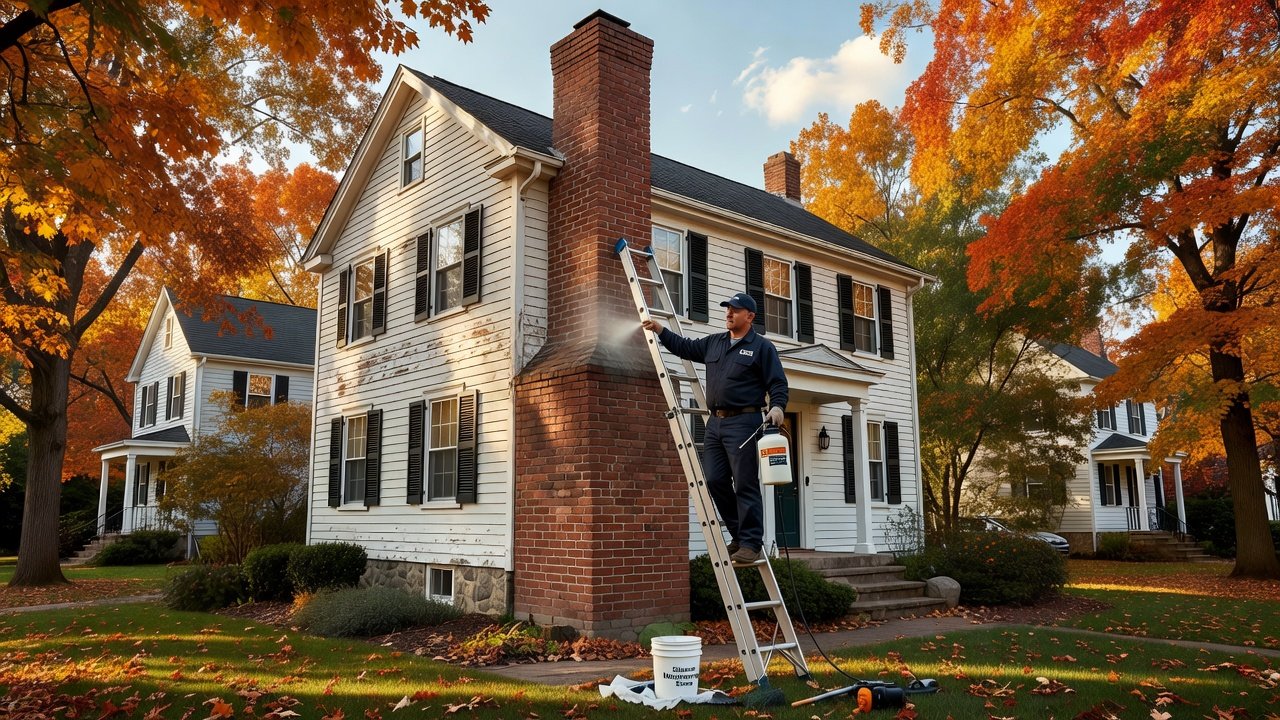
Essential Chimney Waterproofing West Islip NY: 2026 Guide for Pearl River Residents
According to the National Fire Protection Association, failure to maintain chimneys is the leading contributing factor in home heating fires accounting for 31% of all home heating fires in the United States. Water damage is one of the quietest accelerators of that risk. Masonry chimneys absorb moisture constantly, and in a climate like the one we see across Rockland County and into Long Island, freeze-thaw cycles do serious structural damage before most homeowners notice anything at all.
Last winter, a homeowner near the Blue Hill Golf Course area in Pearl River called us about a damp smell in the living room whenever rain came through. She assumed it was a roof issue. When our technicians arrived, the chimney crown was cracked across its entire width, the mortar joints on the south-facing side were spalled down to the brick, and water had been wicking behind the flashing for at least two seasons. The firebox itself had rust staining on the damper frame. None of it was visible from the street. A single professional waterproofing treatment combined with a crown repair would have stopped all of it at a fraction of the eventual restoration cost.
If you are planning to hire a contractor for chimney waterproofing in West Islip NY or anywhere across our Pearl River service area this guide will walk you through exactly how to choose the right one, what questions to ask, and where the hiring process typically goes wrong.
Before You Start: Know What the Job Actually Involves
Chimney waterproofing is not paint. It is not a coat of exterior latex brushed over old brick. Professional waterproofing uses a vapor-permeable siloxane or silane-siloxane sealant that allows trapped moisture to escape outward while blocking new water from penetrating inward. Any contractor who does not know the difference between a film-forming sealer and a penetrating one has no business treating your masonry.
Before you call anyone, walk around your chimney from the ground and look for these warning signs: white efflorescence staining on the brick, cracked or missing mortar joints, a visibly cracked or flaking crown, rust stains below the flashing line, or interior damp spots on the ceiling near the chimney chase. Photograph everything. These photos will help you evaluate how thoroughly a contractor inspects the chimney during their estimate visit and whether they actually look at what you already found.
Step 1: Verify CSIA Certification Before the First Phone Call
The Chimney Safety Institute of America certifies chimney sweeps and inspectors to a documented national standard. The CSIA recommends that all chimneys be inspected at least once a year and cleaned as needed and that standard only means something if the person doing the work is actually trained to it.
When you call a contractor, ask directly: “Are your technicians CSIA-certified?” Then verify it. The CSIA maintains a public database at csia.org where you can search by zip code. We are listed there, and any legitimate company serving Pearl River, Nanuet, Orangeburg, or the broader Rockland County area should be as well. If a contractor cannot point you to their certification, move on.
Step 2: Ask Specifically About Their Waterproofing Process Not Just the Product
A lot of contractors will name-drop a brand like ChimneySaver or Siloxirane and let you assume that settles the question. It does not. The product is only as good as the surface preparation that precedes it. Ask these three questions:
- Do you tuckpoint deteriorated mortar joints before applying the sealer?
- Do you repair or replace the crown before waterproofing, or after?
- How many coats do you apply, and what is the manufacturer’s recommended drying time between coats?
A contractor who hesitates, vagues out, or says “we just spray it on” is cutting corners. Proper prep cleaning the masonry, letting it dry fully, patching cracks takes time. In our experience, rushing that phase is the single most common reason waterproofing fails within a year or two.
Step 3: Request a Written Scope of Work Before Any Money Changes Hands
This is where we see homeowners in Piermont, Tappan, and nearby communities get burned most often. They get a verbal quote, a handshake, and a guy on a ladder the next morning. Then the bill at the end is not what they expected, or the work that was promised crown repair, flashing inspection, sealer application was only partially completed.
Insist on a written proposal that itemizes every task: surface cleaning method, mortar repairs (linear feet or approximate scope), crown repair or replacement, number of sealer coats, and warranty terms. If a contractor refuses to provide this, walk away. A professional outfit has nothing to hide in writing.
Step 4: Understand What a Fair Price Looks Like in 2026
A 2022 HomeAdvisor survey found the average cost of professional chimney services in the United States ranges from $129 to $378 for a basic sweep, with restoration and waterproofing projects running considerably higher depending on scope. For a full waterproofing treatment in our region including crown repair, minor tuckpointing, and two coats of a penetrating siloxane sealant you should expect to pay somewhere between $450 and $900 for a standard single-flue chimney in average condition. More extensive masonry damage, a tall chimney requiring staging, or significant flashing work will push costs above that range.
Be skeptical of quotes well below that range. Unusually low bids usually mean the contractor is skipping prep work, using a film-forming sealer that will trap moisture and accelerate spalling, or planning to upsell you heavily once they are on the roof. Get at least two written quotes and compare scope, not just price.
Step 5: Check Insurance, Licensing, and Local Reviews Specific to Your Area
New York requires contractors performing home improvement work to be registered with the state. Ask for their NY Home Improvement Contractor registration number and verify it at the Department of State website. Also confirm they carry general liability insurance and workers’ compensation get the certificate of insurance in writing, not just their word for it. A worker injured on your roof without proper coverage can become your financial problem.
Then look at reviews, but look carefully. Search specifically for reviews mentioning towns close to yours Pearl River, Valley Cottage, West Nyack, or Blauvelt. A company with 200 reviews from Suffolk County homeowners may have no real experience with the specific frost patterns, clay soil movement, and older housing stock that characterize Rockland County chimneys. Local experience matters in masonry work.
Step 6: Insist on a Level 1 or Level 2 Inspection Before Waterproofing Begins
NFPA 211, the standard for chimneys, fireplaces, vents, and solid fuel-burning appliances, classifies inspections into three levels. A Level 1 inspection covers the accessible portions of the exterior and interior. A Level 2 is required after any event that may have damaged the chimney including a harsh winter with repeated freeze-thaw cycles.
No responsible contractor should apply waterproofing to a chimney they have not inspected first. Sealing over active cracks, failed flashing, or a compromised liner traps problems inside the masonry and makes them worse. Our certified sweeps always complete a documented inspection before any waterproofing recommendation so you know exactly what you are authorizing and why.
Troubleshooting Tip: What to Do If Your Freshly Waterproofed Chimney Is Still Showing Moisture
If you had waterproofing applied within the past two seasons and you are still seeing damp spots on the ceiling or interior wall near the firebox, the sealer may not be the issue. In our experience, the most common culprits are an improperly flashed chimney-to-roof joint, a chimney cap that is undersized or missing entirely, or hairline cracks in the crown that were not addressed before the sealer went on. Call us back or whoever did the work and ask specifically for a flashing inspection and a crown evaluation. If the original contractor is not responsive, that is a red flag worth noting when you leave a review.
What to Expect When You Call American Chimney Company
When Pearl River and surrounding Rockland County homeowners call us, we start with an honest inspection not a sales pitch. Our CSIA-certified technicians document what they find, explain it in plain language, and provide a written estimate before any work is scheduled. We use vapor-permeable penetrating sealers applied to properly prepared surfaces, and we stand behind our work with a written warranty. We are not the cheapest option on the market, and we are straightforward about that. We are the option that does the job correctly the first time.
Frequently Asked Questions
How often does a chimney in Pearl River, NY need to be waterproofed?
Most penetrating siloxane sealers carry a 5- to 10-year warranty under normal conditions. In Rockland County, where winter freeze-thaw cycles are frequent and housing stock tends to be older, we generally recommend having the chimney exterior re-evaluated every five years. If the chimney has had significant masonry repairs or a crown replacement in the interim, re-application may be needed sooner. A brief annual visual check after each winter is a good habit regardless of when waterproofing was last applied.
Can chimney waterproofing be done in winter, or does it need to wait until spring?
Most penetrating sealers require the masonry surface temperature to be above 40°F and the surface to be dry at the time of application. In Pearl River and the surrounding area, that typically means waterproofing is best scheduled between late April and October. Applying sealer to frozen or damp masonry prevents proper penetration and can trap moisture exactly the opposite of what you want. If you are calling us in January about a water problem, we will inspect and document the damage, then schedule the waterproofing treatment for appropriate weather conditions.
Does homeowner’s insurance cover chimney water damage in New York?
Generally, standard homeowner’s insurance policies in New York do not cover chimney water damage that results from gradual deterioration or lack of maintenance. Coverage may apply if the damage is sudden and caused by a specific event a fallen tree, a severe storm that displaced flashing, and so on. Because chimney water damage is almost always classified as a maintenance issue, insurers routinely deny these claims. This is one reason we encourage homeowners in Pearl River, Nanuet, and across Rockland County not to defer waterproofing it is far more cost-effective than an out-of-pocket masonry restoration.
Schedule Your Pearl River Chimney Waterproofing Assessment
If your chimney has not been inspected or waterproofed recently, now is the right time to address it before the next freeze-thaw season does more damage. Contact American Chimney Company today to schedule a certified inspection and get a clear, written assessment of what your chimney actually needs. We serve Pearl River, Nanuet, Orangeburg, Blauvelt, and communities throughout Rockland County and Long Island. Call us or request a free estimate online at americanchimneycompany.com. Our team is ready to help you protect your home and your family.
Related from American Chimney Company: Chimney Waterproofing & Leak Repair in Morristown, NJ · Chimney Waterproofing Louisville KY · Chimney Sweep & Cleaning in Yonkers, NY