
Essential Chimney Inspection Copiague NY: 2026 Guide for Ossining, NY Residents
A standard chimney inspection runs between $129 and $378 but ignore the warning signs long enough, and you’re looking at liner replacements, masonry rebuilds, or damage from a chimney fire that can push costs past $5,000. We’ve seen it happen to homeowners throughout Ossining, and the painful part is that every one of those situations started with something small and visible that got waved off. This guide exists so you don’t make that same call.
Last January, a homeowner near downtown Ossining on Spring Street reached out after noticing a faint but persistent smoke smell in the living room even on days the fireplace hadn’t been used in a week. Our certified sweep found a cracked terra cotta flue liner with third-stage creosote buildup pressed against the fracture. The repair cost was significant. The inspection that would have caught it a season earlier? Under $200. That gap is exactly what we want Ossining homeowners to understand before their heating season starts.
Why Ossining Homes Face Particular Chimney Risk
The Hudson Valley climate is genuinely hard on masonry. Ossining sits close enough to the river that freeze-thaw cycles hit chimneys repeatedly through late fall and into March. Older neighborhoods like Brookside and the streets running up from the waterfront have homes built in the 1920s through 1950s, many with original flue systems that haven’t been evaluated in years. Further up toward the Teatown Lake Reservation area, newer construction sometimes has prefabricated factory-built fireplace systems a different set of failure points that require a trained eye.
The CSIA recommends that all chimneys, fireplaces, and vents be inspected at least once a year and cleaned as needed to reduce fire and carbon monoxide risks. That’s not a sales pitch it’s the professional standard our certified sweeps follow on every job, whether we’re working in Ossining proper, Briarcliff Manor, or over in Sleepy Hollow.
Warning Signs You Can See, Hear, or Smell Right Now
These are the actual observable signals that something is wrong. We’ve organized them by urgency so you know when to call today versus when to schedule before the season starts.
White Staining on the Exterior Brick
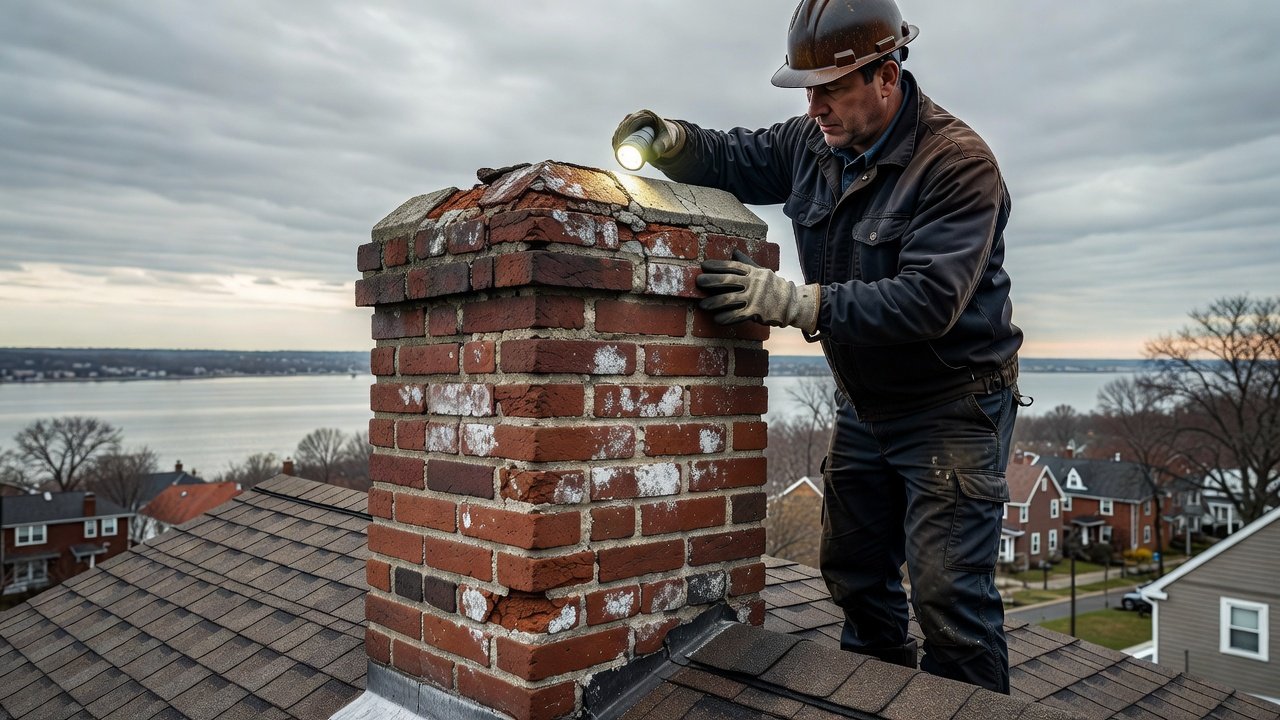
That chalky white residue called efflorescence is mineral salt left behind as water moves through your masonry and evaporates out the face. It means moisture is already getting inside the chimney structure. On its own it’s not an emergency, but left unaddressed, that moisture accelerates spalling, weakens mortar joints, and can eventually compromise the flue. Keep an eye on it but schedule an inspection this season.
Mortar Joints That Look Recessed or Crumbling
Stand back and look at the joints between your chimney bricks. If they look sunken, if pieces are breaking away, or if you can see gaps that’s spalling mortar and it lets water in directly. One bad winter accelerates this fast. We see significant deterioration in homes along the Ossining waterfront corridor where wind-driven rain compounds the problem. Call a pro now. Deteriorated mortar is an active water intrusion point.
A Smoke Smell When the Fireplace Is Cold
This is the one that should stop you immediately. Smoke odor without active burning usually means creosote deposits are off gassing through a crack in the liner or past a failed damper seal. It can also indicate a blockage a bird nest, debris, or collapsed tile that’s trapping air and pushing residual gases back into the living space. According to the U.S. Consumer Product Safety Commission, carbon monoxide from heating equipment sends approximately 20,000 Americans to emergency rooms annually. A smoke smell is an early warning that your system’s integrity is compromised. Call a pro now.
Black Staining Around the Fireplace Damper or Firebox Opening
Soot marks on the face of your firebox, on the mantel, or on the wall above the opening tell us the fireplace is backdrafting smoke is coming back into the room instead of drawing up the flue. This happens when the flue is blocked, when the chimney cap is missing or damaged, or when there’s a draft pressure problem in the house. It’s also a sign the firebox may be accumulating creosote at the smoke shelf where you can’t see it easily. Call a pro now.
Visible Rust on the Damper or Firebox
Rust tells you moisture has been getting in consistently. A rusted damper often won’t seal properly, which means cold drafts in winter, conditioned air loss in summer, and more critically an open pathway for carbon monoxide from other combustion appliances in the house to back-draft into living spaces. This is common in homes in Tarrytown and the older sections of Ossining where chimney caps were never installed or have failed. Schedule an inspection before you run the fireplace again.
Spalling or Missing Bricks Near the Chimney Crown
Get your eyes to the roofline binoculars work fine. If you see bricks that look like they’re flaking, have chunks missing, or if you spot actual pieces of brick or mortar on the roof or in the gutters, your chimney is shedding material. The crown (the concrete cap at the very top) is usually the first to go, and once it cracks, water funnels directly into the flue system. Call a pro now. This one moves fast.
Rattling or Grinding When You Open the Damper
A damper that sounds wrong when you operate it is often warped from heat stress, corroded, or has debris caught in the mechanism. A damper that won’t fully close is an ongoing energy drain and a safety gap. In our experience, this tends to go unaddressed for years because homeowners assume it’s normal. It isn’t. Keep an eye on it, but have it evaluated before the first burn of the season.
Animals or Insects in or Near the Flue
If you’re hearing scratching, seeing birds near the chimney top consistently, or noticing insects around the fireplace opening something has gotten in. Chimney swifts, starlings, and squirrels are common in Westchester County chimneys. Beyond the nuisance, animal nests are a genuine fire hazard and can block the flue completely. A nested chimney that’s lit is a fire call waiting to happen. Call a pro now and do not use the fireplace until it’s been cleared and inspected.
What Drives the Price of a Chimney Inspection Up or Down
A basic Level 1 visual inspection what NFPA 211 defines as the appropriate inspection for a chimney in continued service with no known changes typically falls in the lower range. Add a cleaning for a fireplace that’s been used regularly, and you’re looking at a combined cost in the $200–$350 range for most Ossining homes. That’s consistent with the national average from HomeAdvisor, which places most homeowners around $252 for a sweep and inspection together.
Costs climb when the scope grows. A Level 2 inspection required by NFPA 211 any time a home is sold or after a suspected chimney fire includes camera scanning of the entire flue interior and typically runs $300–$500 depending on flue length and accessibility. If our technicians find liner damage, you’re then looking at repair estimates on top of that. Prefabricated fireplaces in newer Briarcliff Manor or Croton-on-Hudson homes can also cost more to inspect properly because panel replacement and sealing requirements differ from masonry systems.
The single biggest cost driver we see? Deferred maintenance. According to the National Fire Protection Association, failure to clean chimneys is the leading contributing factor in home heating fires, accounting for 31% of such fires. A chimney that hasn’t been swept in three or four seasons takes longer, costs more, and often reveals damage that a one-year gap never would have reached.
What to Expect When You Call Us
We’ll ask you a few straightforward questions: when was the chimney last inspected, what fuel you burn, and whether you’ve noticed any of the warning signs above. From there, we schedule a visit and our certified sweep shows up with the tools to do the job properly inspection camera, draft testing equipment, and the experience to tell the difference between cosmetic wear and a genuine hazard. We provide a written report of findings before any repair conversation happens. No pressure. Just a clear picture of what you’re working with.
Frequently Asked Questions
How much does a chimney inspection cost in Ossining, NY in 2026?
A Level 1 chimney inspection in the Ossining area typically ranges from $129 to $250. If a cleaning is needed at the same time, expect a combined cost between $200 and $378 for most standard fireplaces. A Level 2 inspection with camera scanning runs higher usually $300 to $500 and is required by NFPA 211 when a home is being sold or after any event that may have damaged the chimney, such as a flue fire or severe storm.
What’s the difference between a Level 1 and Level 2 chimney inspection?
A Level 1 inspection is a visual assessment of the accessible parts of your chimney system the firebox, damper, visible flue interior, and exterior masonry. It’s appropriate for a chimney that’s been in regular service with no known problems. A Level 2 inspection includes everything in Level 1 plus a camera scan of the full flue interior and attic or crawl space access if needed. NFPA 211 mandates a Level 2 any time ownership changes or after a chimney fire or significant weather event. We recommend Level 2 for any Ossining home where the inspection history is unknown.
Can I use my fireplace if I’ve noticed one of these warning signs?
For most of the signs listed here smoke smell with a cold fireplace, visible liner damage, animals in the flue, or missing/damaged chimney crown we strongly advise against using the fireplace until a certified sweep has evaluated it. Creosote ignites at temperatures as low as 451°F according to the CSIA, and a compromised liner or blocked flue dramatically increases the risk of a chimney fire or carbon monoxide intrusion. Cosmetic issues like surface efflorescence or minor mortar wear are lower urgency, but no fireplace should be put into seasonal use without at least a Level 1 inspection first.
If any of these warning signs sound familiar, we’d rather you call us now than discover the hard way what ignoring them costs. Our team serves Ossining and the surrounding Westchester communities from Sleepy Hollow to Briarcliff Manor and Croton-on-Hudson, and we can usually get a certified sweep out to you within the week. Reach out to American Chimney Company today to schedule your inspection, get a straight answer on what your chimney needs, and head into the heating season with real confidence in your home’s safety.
Related from American Chimney Company: Chimney Sweep, Inspection & Repair in Copiague, NY · Chimney Inspection (Level 1 & 2) in Stamford, CT · Chimney Inspection Charlotte NC — Know What You’re Dealing With Before