
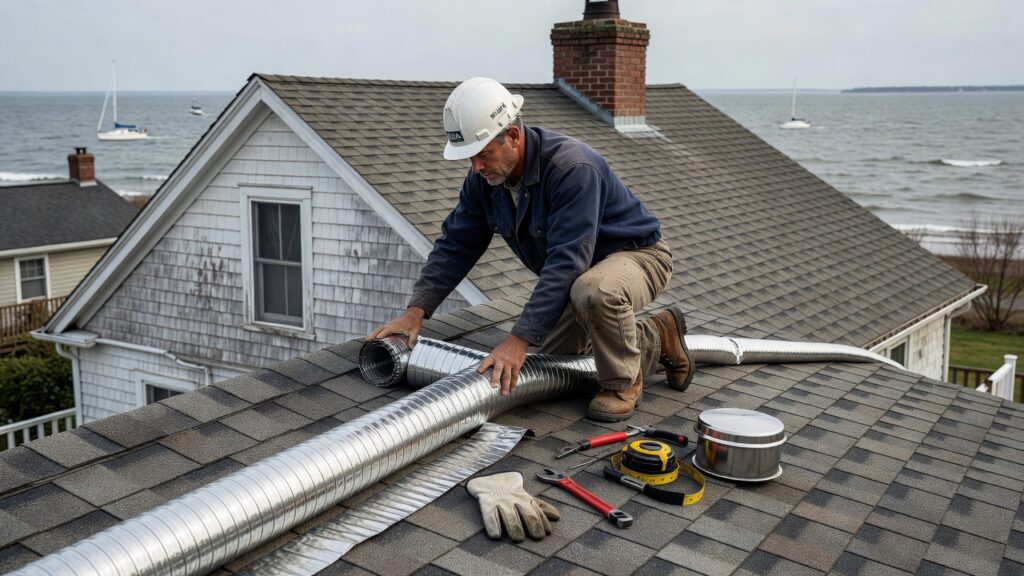
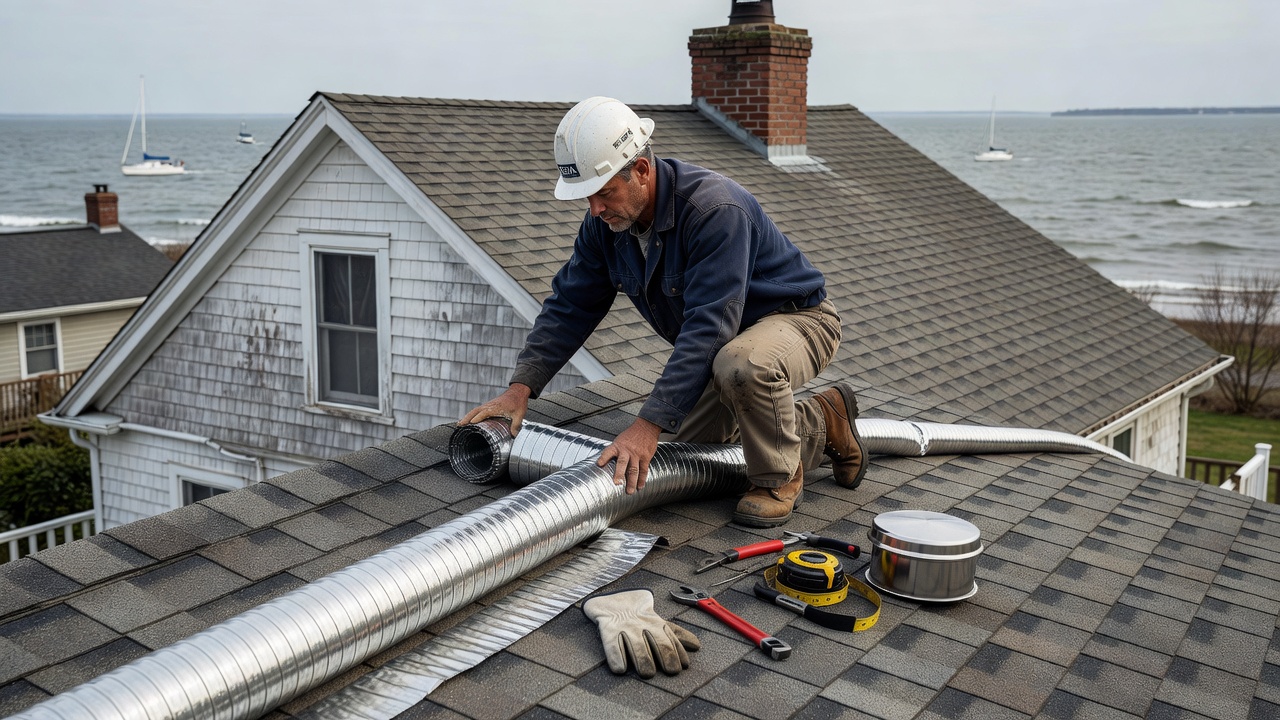
Chimney Liner Installation and Replacement in Copiague, NY
A chimney liner is the protective channel running inside your flue that directs combustion gases safely out of your home while shielding the surrounding masonry from heat and corrosive byproducts. Without an intact liner, those gases, including carbon monoxide, can seep through cracks in the chimney wall and into your living space, and the masonry itself can deteriorate far faster than it should. If your Copiague home has a fireplace, wood stove, oil burner, or gas furnace venting through a chimney, the liner is not an optional upgrade; it’s what keeps the entire system safe to operate.
How we approach every liner job in Copiague
We start with a camera inspection of the existing flue before we touch anything else. Many homeowners on the South Shore call us expecting a straightforward re-liner, and during the camera scan we sometimes find that the original clay tile liner has been compromised by a chimney fire at some point in the past, something that leaves no visible sign from the fireplace opening but shows up clearly on the monitor. That finding changes the scope of the job, and you deserve to know about it before work begins, not after.
Once we have a complete picture of the flue’s condition, we size the new liner correctly for the appliance it will serve. A wood-burning fireplace needs a larger diameter than a gas insert, and an oil furnace produces different flue gases than either. Getting the sizing wrong means the appliance won’t draft properly, which causes smoke rollout, soot buildup, and in some cases dangerous backdrafting. We calculate the correct liner diameter using the appliance’s BTU output, flue height, and the specific requirements in NFPA 211, which is the standard that governs chimney systems in the U.S.
What the installation includes
- Pre-installation video inspection of the full flue length, with photos provided to you
- Removal or stabilization of deteriorated existing liner material where accessible
- Correctly sized stainless steel flexible liner (316L alloy for gas and oil appliances; 304 alloy for wood-burning applications where appropriate)
- Top plate and rain cap installation to seal the liner at the crown and keep water and animals out
- Insulation wrap where code or draft conditions require it, common in taller chimneys and in homes where the flue runs along an exterior wall
- Thimble connection at the appliance end, properly sealed
- Post-installation draft test to confirm the system is drawing correctly before we leave
Who needs a chimney liner in a Copiague home
Copiague’s housing stock includes a large number of Cape Cods and ranch homes built between the late 1940s and the 1970s. Many of those chimneys were originally lined with clay tile, which has a finite service life, typically 50 years under normal use, less if the home has had a chimney fire or if water has been getting in through a failed crown or missing cap. If your home is in that age range and you’ve never had the flue camera-inspected, there’s a reasonable chance the liner has sections that are cracked, spalled, or missing altogether.
Beyond age-related deterioration, a liner replacement is also the right call when you’re switching fuel types or installing a new, higher-efficiency appliance. Modern high-efficiency boilers and furnaces produce cooler, wetter flue gases than older equipment, which are more corrosive to unlined or clay-lined flues. A properly sized stainless steel liner paired with the new appliance solves that problem for the life of the equipment.
Why Copiague homeowners call American Chimney Company
We’ve worked on chimneys throughout Suffolk County for years, and Copiague’s coastal proximity is something we factor in on every job. Salt air accelerates mortar deterioration and can corrode certain metals faster than inland conditions would. When we select liner materials and sealants for a home near Great South Bay, we account for that environment. We’re licensed, fully insured, and our technicians are CSIA-certified, the Chimney Safety Institute of America certification that requires passing a written exam and ongoing continuing education.
We’ll give you a written estimate before any work begins, and we’ll walk you through the inspection photos so you can see exactly what we found and why we’re recommending what we’re recommending. No pressure, no manufactured urgency.
Frequently asked questions about chimney liner work in Copiague
My house was built in 1962 and still has the original clay tile liner. Does it definitely need to be replaced?
Not automatically, but it needs to be inspected with a camera before you use the fireplace again. Clay tile liners from that era can still be serviceable if the home hasn’t had a chimney fire and water infiltration has been minimal. The camera scan will show us the actual condition. If the tiles are cracked or if sections have collapsed into the flue, replacement is necessary. If the liner is structurally sound, we may be able to extend its life with a heat-resistant flue sealant instead of a full re-liner, and we’ll tell you which applies to your chimney specifically.
What’s the difference between a flexible stainless liner and a rigid liner, and which one would you use in my chimney?
Rigid liner sections work well in a straight flue, but most residential chimneys in the Copiague area have at least one offset, a bend where the flue changes direction to clear a structural element. A flexible liner navigates those offsets without issue. We use flexible 316L stainless for gas and oil appliances because that alloy resists the sulfuric and carbonic acids in those flue gases. For wood-burning applications, 304 stainless is typically used. After we run the camera, we’ll know exactly what your flue looks like and can confirm which product is right before we order anything.
How long does the installation take, and will the fireplace or furnace be usable the same day?
Most liner installations in a standard single-story or two-story home take four to six hours. If we find significant debris in the flue or need to do additional crown work, it may run longer, we’ll let you know upfront if anything we find is likely to extend the day. After the liner is in place and we’ve completed the draft test, your appliance is ready to use. There’s no curing period for the stainless liner itself, though if we apply any crown sealant or masonry repair compounds, we’ll give you specific guidance on drying time before exposing those areas to heat or rain.
Schedule your chimney liner inspection or installation in Copiague
If you’re not sure whether your liner needs attention, the camera inspection is the right first step. If you already know you need a replacement, we can usually get to Copiague within a few days of your call. Contact American Chimney Company by phone or through our online form to set up an appointment. We’ll confirm the scope, give you a written estimate, and get the work done right.
Related from American Chimney Company: Chimney Liner Installation in Copiague, NY · Chimney Inspection in Copiague, NY · Brownstone Chimney Repair in Copiague, NY