
Published November 4, 2026
Chimney Inspection Brooklyn: What Most Homeowners Get Wrong Before the First Cold Night
A homeowner in Flatbush called us last November, three days before Thanksgiving, because smoke was backing into her living room every time she opened the damper. She’d had the fireplace cleaned two years earlier by a handyman who charged $80 and handed her a receipt that said “swept and cleared.” What he hadn’t done was inspect the flue liner, check the smoke chamber, or note the significant creosote buildup that had formed in the offset section of her chimney. By the time we arrived, she had third-stage creosote on the liner walls, the kind that looks glazed and black and can ignite at temperatures as low as 451°F, according to the CSIA. We got it resolved, but it was close.
That call is not unusual. A chimney inspection in Brooklyn gets misunderstood more than almost any other home service, partly because chimneys are out of sight and partly because a lot of well-meaning but underqualified people perform them. Here’s what we see homeowners getting wrong, and why it matters before temperatures drop.
Thinking a Cleaning and an Inspection Are the Same Thing
This is the most common source of confusion we encounter across Brooklyn, from Sunset Park to Bay Ridge to Canarsie. A chimney sweep removes combustible deposits. A chimney inspection assesses the structural and functional condition of your entire system, including the flue liner, crown, cap, smoke chamber, damper, firebox, and exterior masonry. The two services often happen together, but they are not interchangeable.
NFPA 211, the national standard for chimneys and venting systems, classifies inspections into three levels. A Level 1 inspection covers accessible portions of the chimney and is appropriate for a system that hasn’t changed and has been used normally. A Level 2 inspection, which includes video scanning of the flue, is required any time a home is sold, after a chimney fire, or after any event that could have damaged the system. Many of the brownstones and attached row houses in Park Slope and Carroll Gardens are over a century old. Those properties often need a Level 2 simply because of age and the likelihood of hidden liner deterioration.
When a homeowner books a “chimney cleaning” expecting a full inspection as part of the deal, they sometimes get only a visual sweep of the accessible firebox. If no one scans the flue, cracks in the liner go undetected. That’s how carbon monoxide finds its way into living spaces.
Assuming a Gas Fireplace Doesn’t Need an Annual Inspection
We hear this one frequently from homeowners in Cobble Hill and Windsor Terrace who converted their wood-burning fireplaces to gas inserts years ago. The assumption is that because there’s no wood and no creosote, the chimney takes care of itself. It doesn’t.
Gas appliances still vent combustion byproducts, including carbon monoxide and water vapor, through the flue. Moisture causes liner deterioration and masonry spalling. Birds and squirrels nest in unprotected flue tops regardless of fuel type. A cracked liner on a gas system can allow carbon monoxide to migrate into the home just as readily as one on a wood-burning system. The U.S. Consumer Product Safety Commission estimates that carbon monoxide poisoning from heating equipment, including fireplaces and chimneys, sends approximately 20,000 Americans to emergency rooms annually.
The CSIA recommends that all chimneys, fireplaces, and vents be inspected at least once a year and cleaned as needed. That recommendation applies to gas systems as directly as it does to wood-burning ones.
Believing New Construction or a Recent Renovation Means You’re in the Clear
Brooklyn has seen significant residential construction and gut-renovation activity over the past decade, particularly in Bushwick and Crown Heights. Homeowners who moved into a recently renovated townhouse sometimes assume the chimney was addressed as part of the work. It frequently wasn’t.
Contractors focus on kitchens, bathrooms, and electrical panels. Unless a chimney specialist was specifically contracted, the flue often got a cosmetic cleaning at best. Worse, renovation work can introduce new problems: debris falls into open flues, mortar joints get disturbed, and liner connections get jostled. We’ve inspected post-renovation chimneys that had chunks of old plaster and broken brick sitting at the smoke shelf.
If you bought or renovated a property within the last two years and haven’t had a certified inspection, that’s the first thing to schedule before the heating season.
Underestimating What “It Worked Fine Last Year” Actually Tells You
A chimney that functioned without incident last winter is not evidence that it’s safe this winter. Chimney systems degrade between seasons. Freeze-thaw cycles crack mortar joints and spall brick faces. A single season of heavy use deposits creosote at a rate that depends on burn temperature, wood moisture content, and how long fires run. According to the National Fire Protection Association, failure to clean chimneys is the leading contributing factor in home heating fires, accounting for 31% of such fires.
The chimney doesn’t announce when it crosses from “working” to “dangerous.” A liner crack doesn’t produce visible smoke in the room until conditions are exactly wrong. By the time a homeowner in Prospect Heights or Kensington notices a problem, it’s often because something has already failed.
Annual inspections exist precisely because deterioration is invisible from the living room. The job of a certified sweep is to find the thing you can’t see before it becomes the thing you can’t ignore.
Hiring on Price Alone
A 2022 survey by HomeAdvisor found that the average cost of a professional chimney sweep in the United States ranges from $129 to $378, with most homeowners paying around $252. That range reflects differences in scope, region, and qualifications. What it doesn’t reflect is the significant difference between a certified professional and someone who owns a brush and a shopvac.
CSIA-certified chimney sweeps complete training and testing that covers liner systems, appliance venting, clearances, and hazard identification. When you’re booking a chimney inspection in Brooklyn, ask whether the technician holds CSIA certification. A lower quote from an uncertified provider often means a visual check of the firebox and a receipt. It won’t tell you whether the clay tile liner in your 1920s brownstone has separated joints, and it won’t catch the stage-two creosote forming in the first bend above the smoke chamber.
The cost of a proper inspection is a small offset against the cost of a chimney fire or a CO event. That math isn’t complicated.
What to Expect When You Call Us
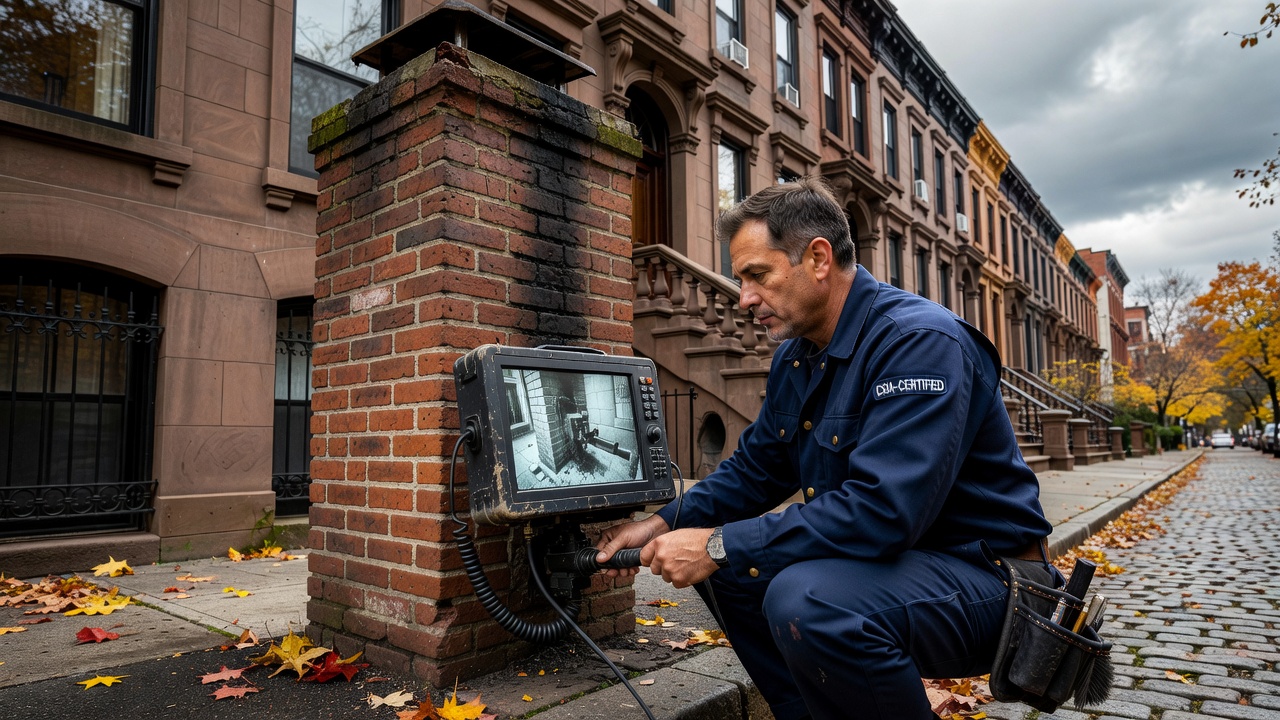
When our team arrives for a chimney inspection in Brooklyn, we start with the exterior, checking the crown, cap, flashing, and visible masonry for deterioration. We move to the firebox and smoke chamber, then run a camera through the flue to document the liner condition from bottom to top. We tell you what we find in plain language, show you photos if anything warrants attention, and give you a written assessment. If cleaning is needed, we do it on the same visit when the schedule allows. We don’t recommend repairs you don’t need, and we won’t sign off on a system we can’t stand behind.
Frequently Asked Questions
How often should I schedule a chimney inspection in Brooklyn?
The CSIA recommends a chimney inspection at least once per year for any fireplace or heating appliance that uses a chimney, regardless of fuel type. In Brooklyn, where older building stock and variable usage patterns are common, annual inspections are especially important. If you’ve had a chimney fire, recently bought or renovated a home, or switched fuel types, a Level 2 inspection with video scanning is the appropriate starting point.
What does a chimney inspection in Brooklyn typically cost?
Based on national survey data from HomeAdvisor, most homeowners pay between $129 and $378 for a professional chimney sweep and inspection, with an average around $252. Pricing in the New York City area may run toward the higher end of that range depending on scope, accessibility, and whether a video inspection of the flue is included. A Level 2 inspection with camera equipment costs more than a basic Level 1 visual check. Contact us directly for a current estimate based on your specific system.
My home in Brooklyn has a gas fireplace. Do I still need an annual chimney inspection?
Yes. Gas fireplaces vent combustion byproducts, including carbon monoxide and water vapor, through the chimney flue. Liner cracks, blockages from nesting animals, and moisture damage affect gas systems the same way they affect wood-burning ones. The CSIA’s annual inspection recommendation applies to all chimney and venting systems, including those serving gas appliances. Skipping inspections on a gas system is one of the most common oversights we see from homeowners across Brooklyn.
Schedule a Certified Chimney Inspection in Brooklyn Before the Season Starts
Our team at American Chimney Company works with homeowners throughout Brooklyn, from Bay Ridge to Bushwick, and we bring CSIA-certified technicians to every job. If your last inspection was more than a year ago, or if you’ve never had the flue camera-scanned, now is the right time to book. Call us or request an estimate online and we’ll get eyes on your system before the first real cold night of the season.
Related from American Chimney Company: Chimney Inspection Charlotte NC — Know What You’re Dealing With Before · Chimney Sweep, Inspection & Repair in Ossining, NY · Chimney Sweep, Inspection & Repair in Tarrytown, NY