
Essential Chimney Sweep Copiague NY: Warning Signs You Cannot Afford to Ignore in 2026
Most homeowners wait until something goes wrong. A smoke smell that won’t quit, a noise in the flue they can’t explain, or a bill from a contractor after a chimney fire has already done its damage. The mistake isn’t laziness it’s assuming a chimney that looks fine from the outside is fine on the inside. In our experience performing chimney sweep Copiague NY services across Suffolk County, the chimneys that concern us most are the ones nobody has touched in three or four years, yet the homeowner swears it’s “been working fine.”
Last fall, a homeowner on Sequoia Drive in Copiague called us after noticing a persistent smoky odor in their living room not during a fire, but on a warm afternoon with every window closed. They’d used the fireplace maybe a dozen times over the previous two winters and assumed everything was in order. When our technician ran the inspection, we found stage 2 creosote lining the upper third of the flue and a partially obstructed damper. Another season of use and they would have been looking at a real problem. That call saved them from something much worse.
Why Copiague Homes Are Particularly Worth Watching
Copiague sits in a stretch of Long Island where a significant share of the housing stock dates from the postwar building boom of the 1950s and 1960s. Many of those original clay tile flue liners are now approaching 60 to 70 years old. Coastal proximity matters too the salt air and seasonal humidity that homeowners in Lindenhurst and Amityville deal with accelerates deterioration of mortar joints and metal damper components. When we inspect chimneys in this zip code, cracked liner tiles and spalling brick are common findings, not edge cases.
According to the National Fire Protection Association, failure to clean chimneys is the leading contributing factor in home heating fires, accounting for 31 percent of such fires. That statistic hits differently when you’re looking at a flue that last saw a brush during the Obama administration.
Warning Signs That Mean You Should Call Us Now
1. You Can Smell Smoke When the Fireplace Is Cold
This is the sign most people dismiss first. A campfire or ashy odor coming from the firebox on a warm or humid day almost always points to creosote buildup or a draft problem. The smell intensifies in summer because warm outside air pressurizes the house differently. Do not keep an eye on this one call a pro now.
2. Black, Oily Residue Around the Firebox Opening
If you see dark, greasy staining on the brick surround or on the face of the damper, that is creosote migrating out of the flue. According to the CSIA, creosote at stage 3 buildup can ignite at temperatures as low as 451°F well within the range of a normal wood fire. This is a call-a-pro-now situation, not a wait-and-see.
3. White Staining on the Outside of the Chimney
That chalky white residue called efflorescence means water is moving through your masonry and carrying dissolved salts to the surface. We see this frequently on chimneys in West Babylon and Babylon Village, and it signals that moisture infiltration is actively weakening the structure. Left alone, it leads to spalling brick, failed mortar joints, and eventually liner damage. Keep an eye on it in very early stages, but if the staining is widespread or returning season after season, schedule an inspection.
4. Visible Cracks in the Mortar or Brick
Step outside and actually look at your chimney crown and the mortar lines between bricks. Hairline cracks in the crown are relatively common on older Long Island homes and can be addressed with sealant. Cracks that have opened wide enough to fit a credit card edge, or bricks that are visibly shifting or popping off, mean structural repair is needed now. Do not fire the fireplace until a certified sweep has evaluated it.
5. A Damaged or Stuck Damper
Open the damper and look up with a flashlight. It should open fully and hold position. If it’s seized, bent, or will only open partway, combustion gases may not be exiting cleanly and neither will carbon monoxide. The U.S. Consumer Product Safety Commission estimates that carbon monoxide from heating equipment sends roughly 20,000 Americans to emergency rooms each year. A damper that doesn’t fully function is a real CO risk. Call a pro now.
6. Animals or Debris Falling Into the Firebox
Twigs, nesting material, or the sound of something moving in the flue are obvious red flags, but homeowners in areas like North Amityville sometimes ignore it for weeks. Birds and raccoons are the most common culprits in this part of Suffolk County. Any obstruction in the flue restricts draft and can cause backdrafting of smoke and gases into the living space. This needs to be addressed before the next fire no exceptions.
7. Deteriorating Tiles or Chunks of Material in the Firebox
If you find small pieces of clay tile, mortar, or a sand-like grit accumulating at the bottom of the firebox, your flue liner is breaking down from the inside. NFPA 211, the governing standard for chimney systems, classifies this as a condition that triggers a Level 2 inspection at minimum. Chunks in the firebox mean call a pro now full stop.
8. The Fire Is Hard to Start or Produces Excessive Smoke
Poor draft is the complaint we hear most often. When a fire smokes into the room instead of drawing cleanly up the flue, it usually means a blockage, a downdraft issue, or a flue that’s undersized relative to the insert or stove. This is worth a call, especially if it’s a new behavior in a fireplace that used to work well.
The Mistakes Homeowners Keep Making
The most common error we see by a wide margin is treating chimney maintenance as something to schedule “eventually.” Homeowners in Copiague who burn wood even four or five times a season can accumulate enough creosote to warrant a cleaning within a single year. The CSIA recommends annual inspection and cleaning as needed regardless of how frequently the fireplace is used, because even a rarely used chimney collects moisture, debris, and animal activity.
The second mistake is DIY chimney brushing without an inspection. A brush will remove loose soot but will not tell you whether the liner is cracked, the crown is failing, or the damper is compromised. A camera inspection paired with a professional sweep gives you both the cleaning and the documentation which matters if you’re buying or selling a home in Copiague or nearby Lindenhurst.
A 2022 HomeAdvisor survey found that professional chimney sweeps cost between $129 and $378 on average, with most homeowners paying around $252. That is a fraction of what a chimney fire or CO remediation costs.
What to Expect When You Call Our Team
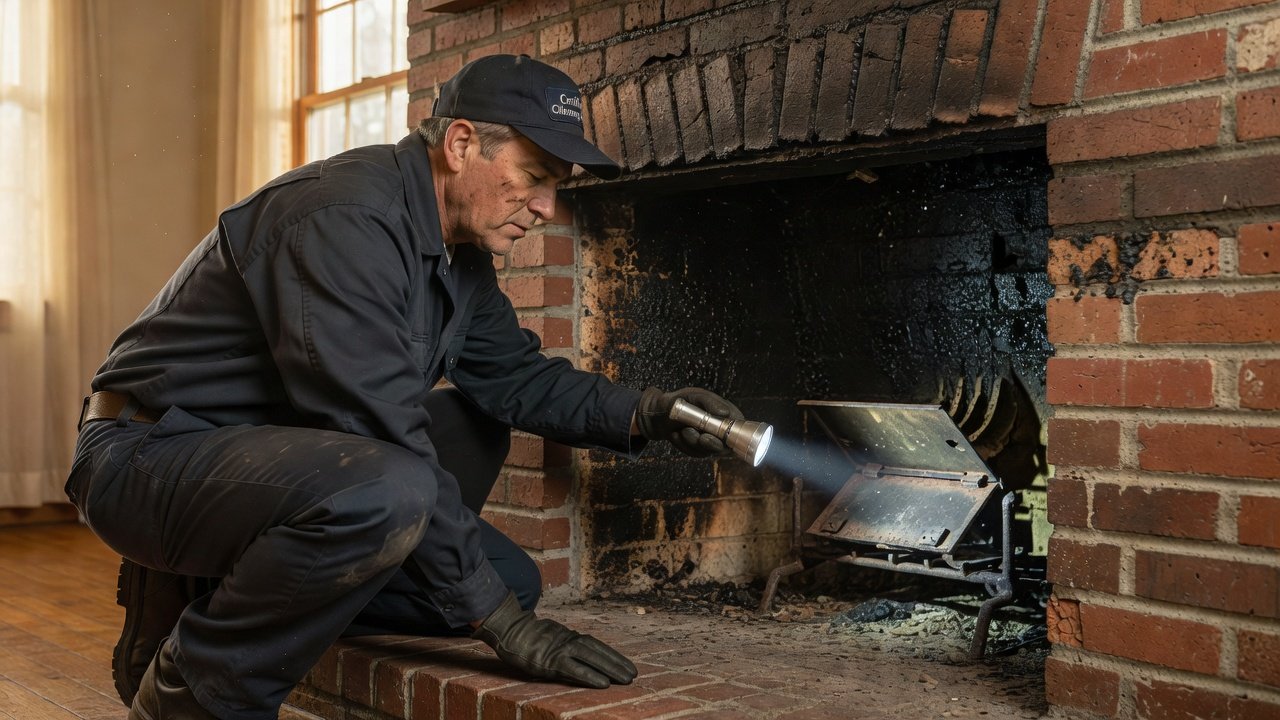
When you reach out to us for a chimney sweep in Copiague, NY, we start with a visual inspection of the firebox, damper, and accessible flue before we touch a brush. We photograph what we find and walk you through it before any work begins. Our certified sweeps cover everything from cap and crown condition to liner integrity, and we’ll tell you plainly what needs attention now versus what’s worth monitoring over the next season. No pressure, no upselling just a clear picture of where your chimney stands.
Frequently Asked Questions
How often should a chimney be swept in Copiague, NY?
The CSIA recommends a professional inspection at least once per year and cleaning as needed based on use. In Copiague, where older housing stock and coastal humidity create additional wear on chimney systems, we generally recommend scheduling an inspection every fall before the first fire of the season regardless of how little the fireplace was used the prior year.
Can I use my fireplace if I notice one of these warning signs?
For most of the signs listed above cracked liner tiles, a stuck damper, visible creosote migration, or any blockage we strongly advise against lighting a fire until a certified sweep has cleared the system. The risk of a chimney fire or carbon monoxide backdraft is real, and the cost of an inspection is minimal compared to what can go wrong. When in doubt, call us first.
What does a Level 2 chimney inspection include, and do I need one?
Under NFPA 211, a Level 2 inspection includes a video scan of the internal flue and is required any time a home is sold, after a chimney fire, or following any event that may have damaged the system. If you’re purchasing a home in Copiague or Lindenhurst, or if you’ve had an unusually hot or smoky fire recently, a Level 2 is the right call. Our team carries the camera equipment to perform this on-site during the same visit as your cleaning.
Schedule Your Copiague Chimney Sweep
If any of these warning signs sound familiar, don’t wait for a worse outcome. Our team at American Chimney Company serves Copiague and the surrounding communities across Suffolk County, and we’re ready to give you a straight answer about the condition of your chimney. Call us at (585) 524-0162 or request a free quote online. A certified inspection is the single most effective thing you can do to protect your home and family this heating season, and it starts with one phone call.
Related from American Chimney Company: Chimney Sweep & Cleaning in Yonkers, NY · Chimney Sweep & Cleaning in Danbury, CT · Chimney Sweep Columbus OH