
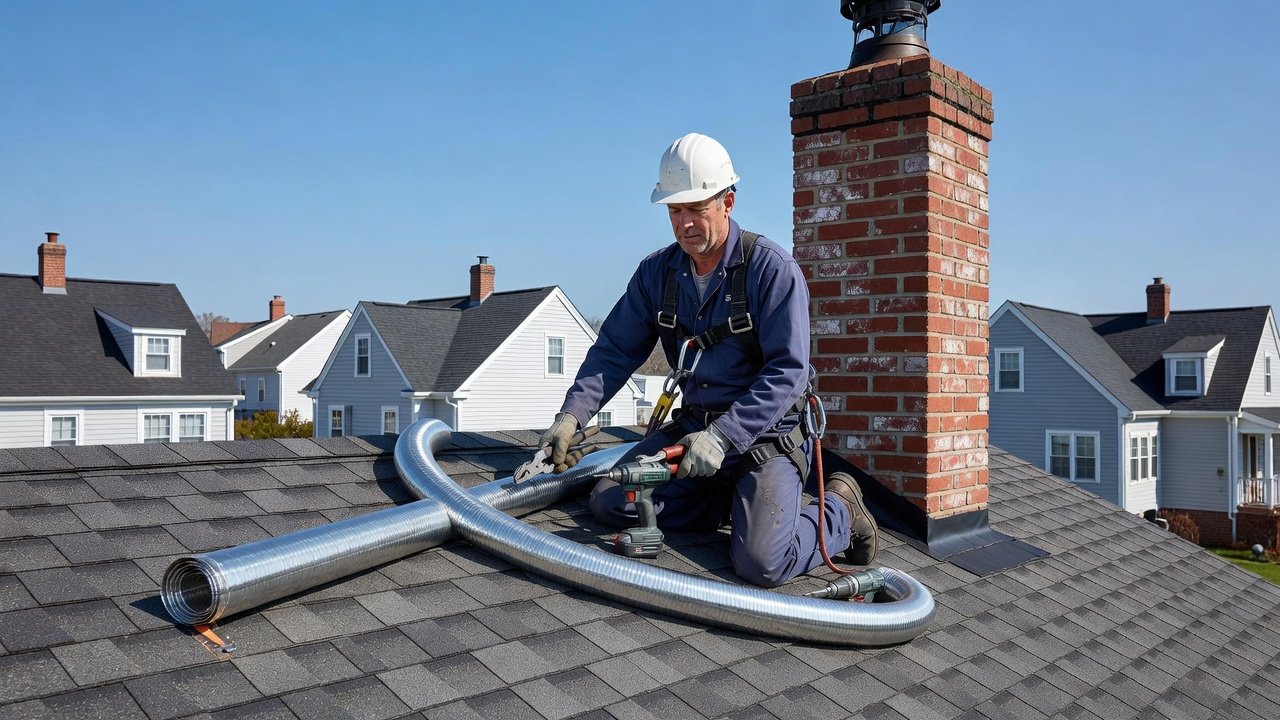
Chimney Liner Installation in Copiague, NY: Questions to Ask Before You Hire Anyone
A lot of homeowners assume a liner is just a liner. Call someone, get a price, schedule the job. But chimney liner installation in Copiague, NY is one of those services where the wrong contractor can leave you with a product that fails inspection, voids your homeowner’s insurance, or worse, allows carbon monoxide to seep into living space. We’ve seen it happen on jobs we were called in to fix after the fact, and it’s never a cheap or simple correction.
Last fall, a homeowner on Great Neck Road in Copiague called us after a different company installed a flexible stainless liner in her oil-fired heating system. The liner was the wrong diameter for the appliance BTU rating, and it had been installed without a proper top plate or insulation wrap. Her furnace was backdrafting. She hadn’t noticed because the symptoms felt like a draft from the windows. That’s the kind of mistake that doesn’t announce itself loudly.
Below are the questions we hear most from Copiague homeowners, answered directly.
Do I Actually Need a New Chimney Liner?
Quick answer: You need one if your current liner is cracked, missing, or sized wrong for the appliance connected to it.
Older homes in Copiague and neighboring Lindenhurst were built during an era when clay tile liners were standard. Clay tile lasts a long time under normal use, but it cracks from thermal cycling, water intrusion, and chimney fires, including small ones homeowners never noticed. NFPA 211, the standard governing chimneys and venting systems, requires that the liner be free of breaches and sized appropriately for every connected appliance. If you’ve converted from oil heat to gas, that alone may mean your existing liner is too large. An oversized liner causes condensation and accelerated deterioration. A Level 2 inspection will tell you exactly what you have.
What Are the Different Liner Options and Which One Is Right for My Home?
Quick answer: The three main options are stainless steel flexible liner, stainless steel rigid liner, and cast-in-place resurfacing. The right choice depends on your appliance type, flue geometry, and condition of the existing masonry.
Flexible stainless liners are the most common for gas appliances and are well-suited to flues with offset sections, which appear frequently in the older colonials and Cape Cods throughout West Islip and Copiague. Rigid liner sections offer better flow for straight runs but cannot navigate bends. Cast-in-place systems, where a pumpable insulating material is formed around a bladder inside the flue, are often the right call when the surrounding masonry is compromised and needs structural support. Each option comes in 304 or 316 alloy stainless; 316 is required for oil and coal appliances because of higher sulfur content in the exhaust. We always verify the correct specification before quoting a job.
What Credentials Should a Chimney Liner Contractor Have in New York?
Quick answer: Look for CSIA certification, proof of liability insurance, and a New York State Home Improvement Contractor license.
The Chimney Safety Institute of America (CSIA) recommends that anyone performing chimney work hold current CSIA certification, which requires passing a technical exam and completing continuing education every three years. In New York, chimney contractors also need a valid Home Improvement Contractor (HIC) registration through the Department of State. On Long Island, Suffolk County has additional consumer protection requirements. Ask for the license number and verify it. Any contractor who hedges on that question or tells you it’s not required for this type of job is a red flag. Our technicians carry current CSIA credentials and full liability coverage on every job, including work in Babylon, Amityville, and Copiague.
What Red Flags Should I Watch for When Getting Quotes?
Quick answer: Be wary of unusually low prices, pressure to decide the same day, and any contractor who won’t pull a permit or provide a written scope of work.
We occasionally get calls from Copiague homeowners who were quoted $400 for a full liner installation. A properly sized, properly insulated stainless liner for an average Long Island home runs between $1,500 and $4,000 depending on flue height, liner diameter, and appliance type, based on current 2026 material and labor costs in the region. A quote far below that range almost always means something is being left out, whether that’s the insulation wrap, the top plate, the connector at the base, or the permit. A contractor who won’t itemize the quote in writing isn’t someone you want working inside your chimney. Also watch for contractors who skip the inspection and go straight to selling you a liner. A liner prescription without a diagnosis is not good practice.
Does Chimney Liner Installation Require a Permit in Copiague?
Quick answer: In most cases, yes. Copiague falls within the Town of Babylon, and structural or mechanical work on a venting system typically requires a building permit.
Permit requirements vary by municipality, but replacing or installing a chimney liner is generally classified as mechanical work affecting a life-safety system, which triggers permit requirements under the New York State Building Code. Some contractors skip this step to save the homeowner time or money upfront. That shortcut can create problems when you sell the home, file an insurance claim after a fire, or need work inspected later. We handle the permit process as part of our service. It’s not optional on any job we take.
How Do I Know If the Liner Was Installed Correctly After the Job Is Done?
Quick answer: Request a post-installation video inspection of the flue and a written documentation of the liner specs installed.
A camera scan after liner installation should show a smooth, continuous liner with no gaps at seams, a properly fitted top plate, and no visible debris in the flue. The documentation should include the liner manufacturer, alloy grade, diameter, length, and the date of installation. According to NFPA 211, the liner must be correctly sized for the connected appliance’s output and fuel type. If a contractor can’t hand you that paperwork and show you the camera footage, you have no way to verify what was actually installed. We provide both on every job, whether we’re working in Copiague, North Babylon, or Deer Park.
What Happens If I Skip the Liner and Just Keep Using the Fireplace?
Quick answer: You risk chimney fire, carbon monoxide exposure, and structural damage to the surrounding masonry.
The U.S. Consumer Product Safety Commission estimates that carbon monoxide poisoning from heating equipment, including fireplaces and chimneys, sends approximately 20,000 Americans to emergency rooms annually. A cracked or missing liner allows combustion gases, including carbon monoxide, to migrate through gaps in the masonry into adjacent living spaces. It also allows heat transfer to combustible framing materials in older walls. According to the National Fire Protection Association, failure to clean and maintain chimneys is the leading contributing factor in home heating fires, accounting for 31 percent of such fires. A damaged liner makes that risk significantly higher. This isn’t a cosmetic issue you can defer indefinitely.
How Long Does a Stainless-Steel Liner Last, and Does It Come with a Warranty?
Quick answer: Quality stainless liners carry lifetime warranties from the manufacturer, but only when installed according to specification.
Most reputable liner manufacturers, including those whose products we install, offer lifetime limited warranties on stainless steel liner systems. The warranty is typically tied to correct sizing, correct alloy for the fuel type, and proper installation. That’s why documentation matters. A liner installed without the correct insulation wrap or with improper connections may still fail prematurely regardless of the warranty language, because the failure mode won’t be covered. We use liner systems from manufacturers with strong warranty support, and we install to spec so the warranty is actually valid, not just a number on a brochure.
How Do I Compare Quotes from Multiple Chimney Contractors?
Quick answer: Compare line by line, not just the total. Make sure each quote specifies liner alloy, diameter, insulation, top plate, and permit fees.
A quote that reads “chimney liner installation, $1,800” tells you almost nothing. A quote that reads “6-inch 316 stainless flexible liner, 25 feet, insulation wrap, stainless top plate, base connector, permit filing, post-installation camera inspection” gives you something to compare. When you’re getting multiple quotes for liner work in Copiague or the surrounding South Shore communities, ask each contractor to match that level of detail. If they won’t or can’t, that’s a meaningful data point. Price differences that look significant often disappear when you account for what’s included. And differences that remain after a line-by-line comparison usually reflect real differences in material quality or scope.
Summary: What to Look for When Hiring for Chimney Liner Installation in Copiague, NY
| What to Check | What to Look For | Red Flag |
|---|---|---|
| Credentials | CSIA certification, NY HIC license, liability insurance | Can’t provide license number |
| Inspection before quote | Level 2 camera inspection recommended | Quotes liner without seeing the flue |
| Written scope of work | Liner alloy, diameter, insulation, top plate, permit | Vague single-line quote |
| Permit handling | Contractor files with Town of Babylon | Says permit isn’t required |
| Post-install verification | Camera footage and written specs provided | No documentation after job |
| Pricing range | $1,500 to $4,000 for typical Long Island installation | Quote under $600 for a full liner system |
| Warranty validity | Manufacturer lifetime warranty, installation per spec | Warranty offered with no installation documentation |
Schedule a Liner Inspection or Installation in Copiague
If you’re not sure whether your liner needs replacement, or you’ve already been given a quote and want a second opinion, call our team at American Chimney Company. We serve Copiague and the surrounding South Shore communities, including Lindenhurst, Amityville, Babylon, West Islip, and North Babylon. Our certified sweeps will inspect your flue with a camera, give you a clear written assessment, and price the work line by line so you know exactly what you’re paying for and why. Contact us to schedule your inspection and get the documentation your home and your insurance company actually need.
Frequently Asked Questions
How long does chimney liner installation take in Copiague, NY?
Most flexible stainless liner installations are completed in one day. A straightforward gas appliance liner in a single-story home typically takes three to five hours. Cast-in-place resurfacing or more complex jobs involving multiple flues or significant offset sections may require a second day. We give you a time estimate in writing before we start so you can plan accordingly.
Will a new liner affect my homeowner’s insurance in New York?
Some New York insurers require documentation of a properly lined and inspected chimney to maintain coverage on wood-burning or solid-fuel appliances. A permitted installation with a post-installation inspection report gives you the paper trail an insurer may request after a fire-related claim. Installing without a permit and without documentation can create coverage disputes. We recommend checking your specific policy language and keeping all liner installation records with your home improvement documents.
Can I use my fireplace while waiting for chimney liner installation to be scheduled?
If our inspection finds that the liner is cracked or missing, we advise against using the appliance until the liner is replaced. The risk of carbon monoxide migration or heat transfer to combustible framing materials is real and not one we’d ask a homeowner to accept to save a few days of wait time. If your heating system vents through the damaged flue, talk to your HVAC contractor about temporary alternatives while the liner work is scheduled.
Related from American Chimney Company: Chimney Inspection in Copiague, NY · Chimney Waterproofing Louisville KY
Areas we serve
Copiague, NY · Fairfield, CT · Copiague, NY · Tarrytown, NY · Ossining, NY · Copiague, NY · Copiague, NY · Brooklyn, NY